
Rebilling in Procurement
April 10, 2026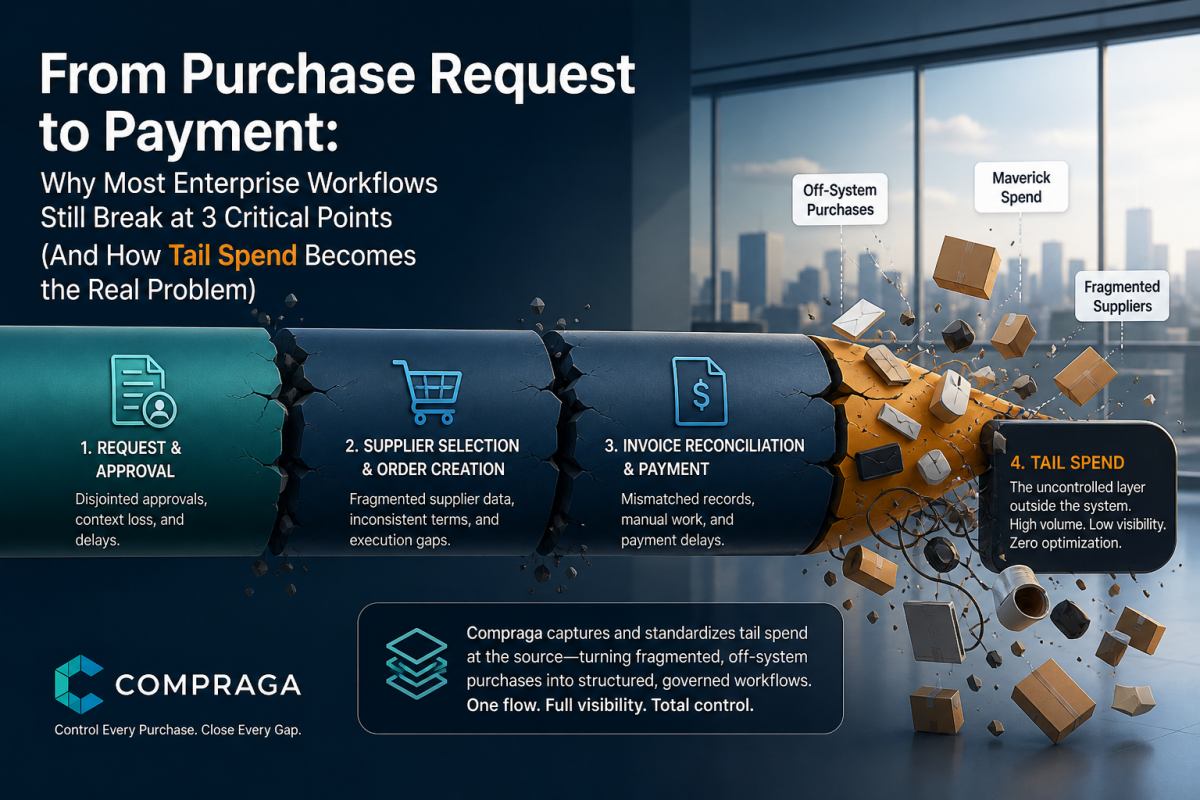
Where Enterprise Procurement Actually Breaks and Why Tail Spend Is the Real Problem
From purchase request to payment, enterprise procurement workflows tend to look controlled at the surface, but in reality they fracture at predictable structural points where context, ownership, and data integrity stop aligning.
The first fracture appears at approval. In theory, a purchase request should move through a clear validation layer where budget, policy compliance, and business urgency are assessed in a structured way. In practice, approval is distributed across fragmented systems and informal communication channels. Managers approve in email threads, finance validates in ERP modules that do not fully reflect operational urgency, and procurement teams often act as intermediaries rather than system owners. The core issue is not speed but context loss. Each stakeholder sees only a partial version of the request, which forces repeated clarification loops and introduces variability that has little to do with the underlying business logic of the purchase itself.
The second fracture emerges during supplier selection and order creation. Once approval is secured, the process is assumed to become mechanical, but this is where fragmentation typically intensifies. Supplier data is scattered across contract repositories, ERP entries, procurement catalogs, and legacy vendor lists that are not consistently synchronized. As a result, the decision to buy is often disconnected from the execution of buying. Procurement teams reconcile multiple inconsistent sources of truth while trying to align pricing, availability, contract terms, and internal compliance rules. This creates a structural gap between intent and execution, where even approved purchases can deviate from policy simply because the system does not enforce a unified real-time view of suppliers and terms.
The third fracture occurs at invoice reconciliation and payment. This stage is where financial systems attempt to reconcile three separate records: the original request, the approved order, and the supplier invoice. In ideal conditions, these should align automatically. In practice, they rarely do. Partial deliveries, timing mismatches, manual data entry errors, and system incompatibilities create persistent discrepancies. Finance teams are then forced into exception management rather than control, spending disproportionate time resolving mismatches instead of analyzing spend or optimizing cash flow. At this point, procurement ceases to be an operational workflow and becomes a reconciliation problem.
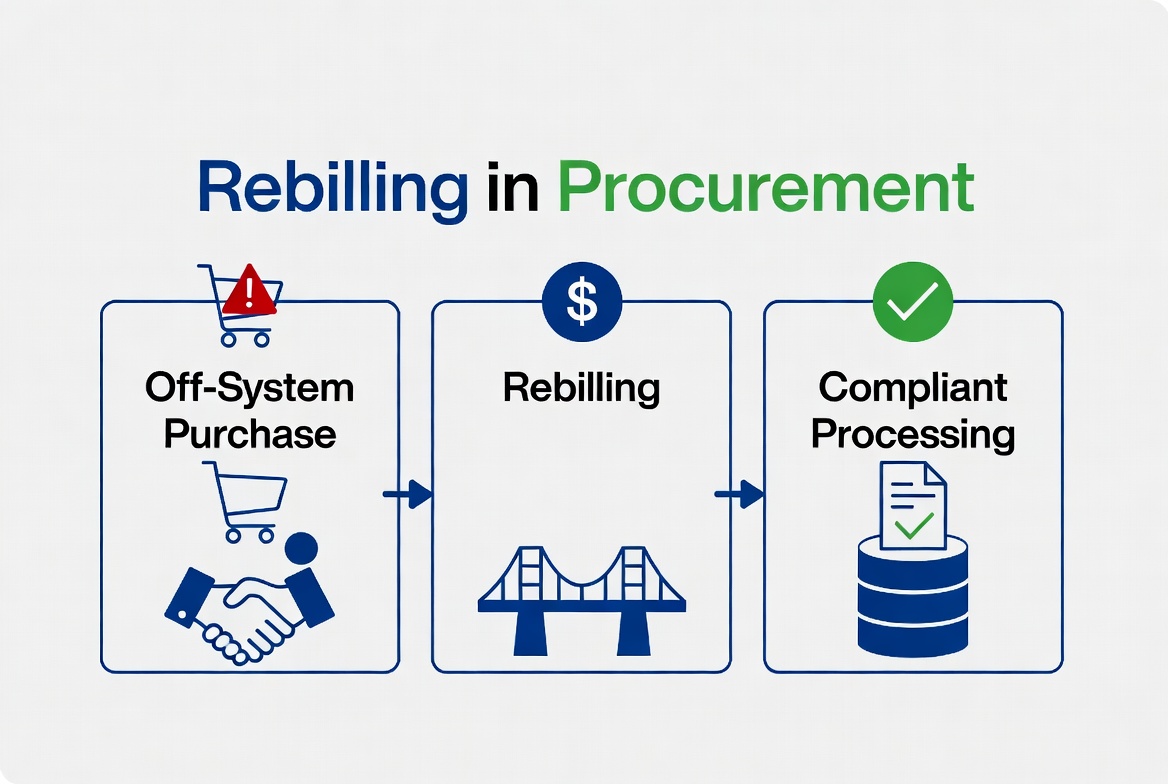
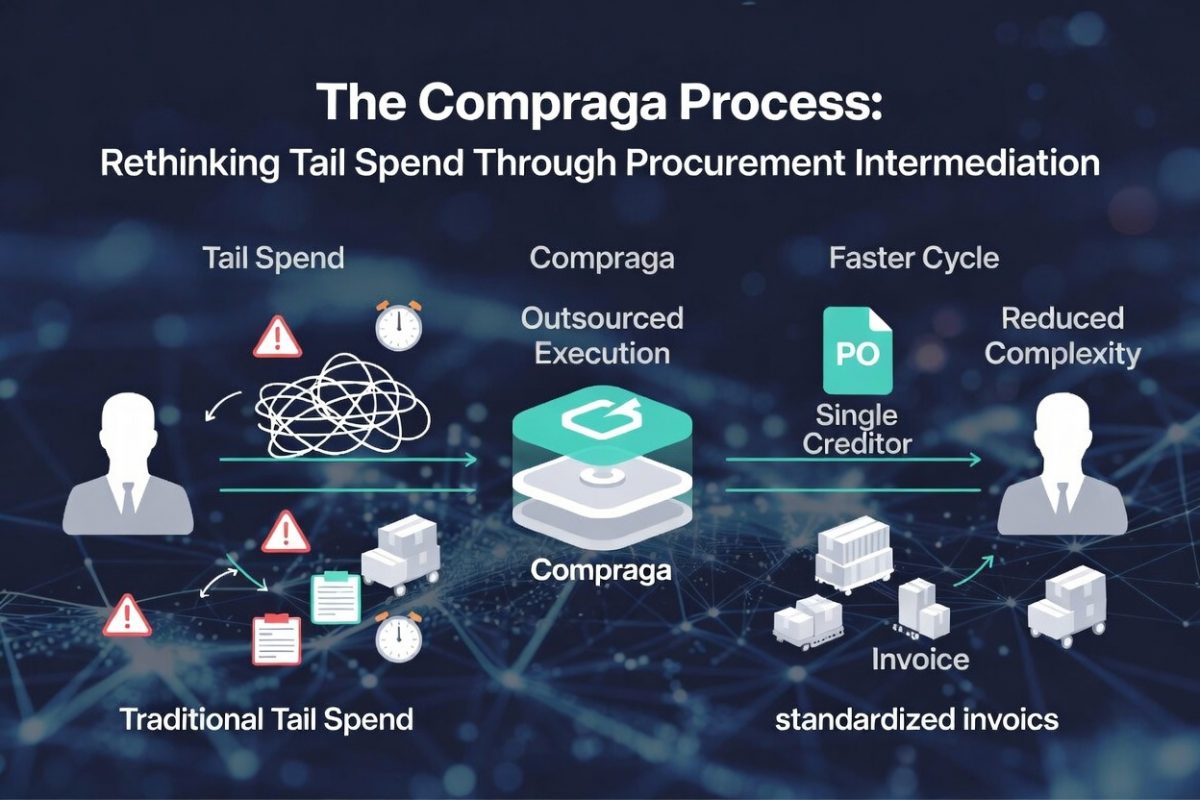
A fourth structural break appears in tail spend procurement, where the system effectively stops behaving like a system. Tail spend is made up of low-value, high-frequency purchases that sit outside of structured procurement channels. It is where employees bypass catalogs, default to familiar vendors, or initiate purchases through fragmented, ad hoc processes that rarely flow cleanly through ERP logic. The result is not just leakage in spend control, but a parallel procurement layer that is invisible in real time, weakly governed, and structurally unoptimized.
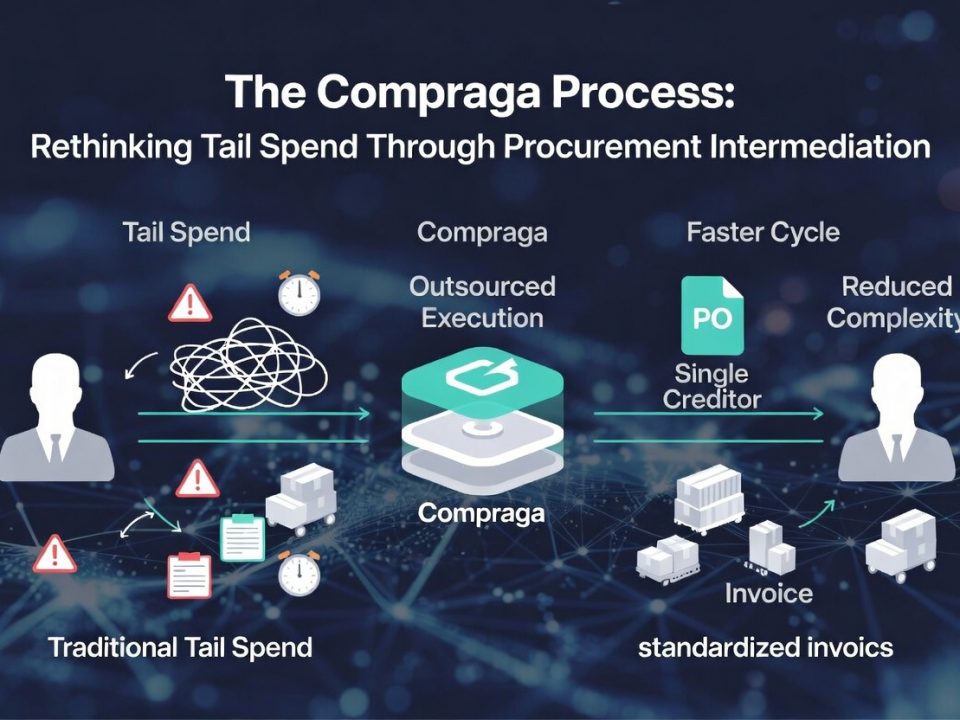
This is precisely the layer where Compraga becomes structurally relevant. Instead of trying to over-engineer the core procurement backbone, Compraga focuses on capturing, routing, and standardizing this fragmented tail spend layer at the point where it actually happens. It turns informal purchasing behavior into structured procurement flow without forcing users into heavy enterprise systems. By doing that, it removes the blind spot where most organizations lose visibility, control, and consolidation leverage. In effect, Compraga does not compete with ERP or procurement suites on core transactional depth; it closes the operational gap they systematically fail to address by design.
What emerges is not just cleaner spend data, but a shift in control surface. Tail spend stops being an uncontrolled residual layer and becomes part of the same governed lifecycle as core procurement, but without the friction that typically causes users to bypass it in the first place.